Sunday, 19 January 2014

A forest of these trees is a spectacle too much for one man to see.


David Douglas – Explorer and Botanist. Ann Lindsay Mitchell and Syd House. Aurum Press,  London, 1999. pp X1V + 241.

This review was written on January 3rd 2004

In 1974 I acquired 40 acres of fairly rough farming land as part of a summer home for my growing children. Family circumstances prevented me from proceeding with our plans and I planted 30 acres of Sitka, Japanese larch and Monterey pine rather than adding farming to my medical profession. This endeavour was to prompt a great interest in trees. After my later retirement I became active as a member of the Irish Tree Society, a representative of an Taisce on the Irish Tree Council and, among other arboreal interests, I wrote a book about the relationship between ivy and our hedgerow and woodland trees.

This biography was largely based on diaries and letters Davis Douglas had sent to Britain during his various travels to the North American continent and to Hawaii. Douglas was born in Scotland of humble parents but was possessed of an extraordinary enquiring mind, particularly in relation to natural history. He became one of the most famous and adventurous of the large group of Scots who contributed so much to the exploration of the natural world. He had an obsessive interest in plants and trees and was fortunate to have been employed by prominent horticularists and botanists from the time he left school.

He died tragically in 1834 at the age of 35 but during his short life and his three visits to America he provided an enormous amount of information about the plants and trees of the United States and the contiguous parts of Western Canada. He contributed his findings to the Historical Society in London which employed him during his travels. Because of his systematic and enquiring mind and his indifference to hardship and the dangers of exploring unknown and hostile territory, he proved to be an excellent choice by the Society and acquired an early reputation as an explorer, traveller, botanist, student of natural history and a diplomat and linguist who could deal with the most hostile and isolated indigenous tribes.

Monteray Pine
Leaving London in July 1823 he first went to New York where he collected valuable information about the trees and plants of the area.  Having returned from New York he put his collection of seeds and plants in order and wrote up the details of his travels.  He was then sent to the largely unexplored west coast of North America where, after spending eight months rounding the Horn, he landed at the mouth of the Columbia River in what is now the State of Oregon. It was here that he accomplished his remarkable work into the local flora. He managed to send by various routes details of his huge collection of seeds and seedlings to London. They were based on his discoveries, the product of which now adorn our gardens, estates and arboreta. They include a variety of sequoias, the Monterey pine, the Sitka spruce and the rediscovery of a few others. Another addition to fashionable tree lovers in the 19th century, the monkey puzzle tree, was discovered by an earlier explorer in the late 1700s in Chile.

It is difficult to understand the toleration to hardship endured by explorers like Douglas during long sea voyages and travelling through wild and dangerous country without any of the modern comforts and conveniences which make travel nowadays so much easier.

A man examines white fox pelts at the Hudson's Bay Co.
Douglas, during his first voyage to North West America, observed at close range the appalling impact alcohol had on the indigenous tribes of the area. Rum had become the major currency and was the principle item which was bartered for furs. The Hudson’s Bay Company, which had a complete monopoly of the fur trade at the time of his visits, is stated to have used about fifty gallons of strong rum and brandy carried overland from the East which, when diluted, made up a quarter of a million gallons for a native population of some one hundred and twenty thousand. According to Douglas alcohol leads to mass addiction and the destruction of families, communities and the indigenous way of life. Many of the employees of the Company in North America pleaded with the authorities in London to cease trading in rum but such pleas went unheard. Later firearms were also used as barter. These proved equally destructive to the indigenous population. There appears to be no limit to the adverse effects which can be inspired by the profit motive and by human acquisitiveness. Man’s inhumanity to man is ubiquitous. Worse is man’s inhumanity to Nature for it will inevitably lead to Nemesis.

Red cedar
Douglas is mainly remembered as being the first person to introduce some of the great trees of North Western America to Europe They included the Douglas and Monterey pines, Sitka spruce, the various Sequoia and the Thuja or Red Cedar among others. Most  have thrived in the British Isles and Europe, and some such the Sitka are now hugely important commercially and are widely grown in commercial forests in Europe.. A few, such as the sugar pine, have been less successful, and failed to survive the 19th century in this part of the world.

David Douglas spent about two and one half years in North Western America during his first visit. He returned to London to fame and claim having crossed Canada on foot or by canoe from the Columbia River in the West to Hudson Bay in the East where he arrived at the end of August 1827.  It is extraordinary the hardship he and his companions endured during the four months trek of three thousand miles or more. One can only wonder how they could have survived with little equipment, poor clothing, an unreliable supply of food, some hostile inhabitants, and the extraordinary vagaries of the weather and the physical environment.
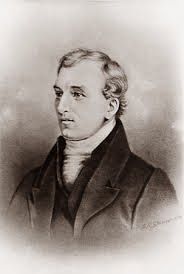
David Douglas
In 1829 Douglas was again sent by the Royal Horticultural Society to the West where he arrived in California in 1840 after a further journey around the Horn. Here the Spanish were still in charge. It was a better settled and more southerly region than the Washington and Oregon areas and he suffered less hardship there. Although a Presbyterian, he received great kindness and assistance from the Spanish monks. Again he worried about the balance of Nature being destroyed because of the policies of the explorers and particularly of the Hudson Bay Company. The Company had a policy of clearing all the animals from the areas occupied by them, leaving large tracts bereft of indigenous fauna. He expressed his concern about the slaughter of the animals to a leading employee of the Company but he was vigorously confronted and advised to mind his own business.

Douglas found new trees in California, including the Monterey Pine (Pinus radiata) and some of the giant sequoia. The Monterey had previously been described by Menzie but was first introduced to Europe by Douglas. He also found and introduced the big cone pine, Pinus coulteri.

Douglas memorial at Scone
He went from California to Hawaii where he died at the age of 35 apparently having fallen into a cattle pit but there is considerable doubt about the exact cause of his death and there were persistent rumours of his being murdered. He had gone to Hawaii to continue his botanical studies and to climb and explore the islands’ great mountains and volcanoes. His death proved to be a major loss to Britain, Ireland and Europe, and a source of great regret to his many admirers in the world of botany and forestry. He is buried in Hawaii and there is a 23 foot memorial to him erected in the churchyard in Scone in Scotland where he was born. The memorial was provided by tree lovers, botanists and gardeners from many lands. His real memorial is to be found in the gardens, landscapes and forests worldwide.

A Douglas Fir at Scone Palace
His contribution to forestry should not overshadow his seminal contribution to botany. He found hundreds of new species of shrubs and plants, nearly all of which reached Britain safely, thanks to his careful preparation of seeds and seedlings, and to his care in sending these by different routes to ensure that at least one sample would arrive safely in London or Glasgow. The biography lists a large number of the trees he introduced and some of the plants which adorn our gardens to-day. The great revival of interest in trees in Ireland at the beginning of the nineteenth century was shared by Britain which had also reached dangerous levels of deforestation. The turnabout was largely due to Douglas and the introduction of so many valuable trees of high quality timber which found a suitable environment in these islands and indeed in many other European, African and Australasian countries.

Like other human tendencies to exaggerate, the tree lover or even expert may exaggerate the age of trees but we know from the late introductions by Douglas that none in Europe can be older than 175 years. Whether the imported trees will have the same long lifespan as their progenitors growing on the Pacific Coast of America remains to be seen. Following Douglas most of our great estates in the British Isles and Europe were planted with his trees widely. More than one and half centuries later you will find these trees singly or in groups everywhere, even in such areas as suburban Dublin as well as in parts of the countryside where estates have been taken over by farmers, parks and suburban areas, The sequoias are among the greatest trees known and are long-lasting in their normal habitat in Western America but five of the 17 Wellingtonias near our house in South Dublin are showing serious signs of leaf loss and diminished growth in the past ten years. The cause of their decline is not clear but it does not augur too well for their long-term survival,

Trunk of  a Wellingtonia Sequoia
Postscript (2014). The above review was written in 2004. Some of the Wellingtonias are now dead or nearly so, and the others are showing various degrees of distress. They lie in about two acres of ground in a building estate close to my house and it is likely that they are suffering from the effects of honey fungus, a slow invasive infection of the roots of trees which, because our failure to find a remedy of the disease, will inexorably lead to their final destruction. 

Monday, 13 January 2014

Germany and Bismarck


Bismarck and the Foundation of the German Empire. James Wycliffe Headlam, 1899.

This review was written on January 12th 2012

This was the third book I ordered on the Kindle. It was free and had been contributed by volunteers because it was out of copyright. I had been searching for a suitable biography to read and found it immediately on the Kindle list. I had never read of Bismarck and I knew little about the formation of modern Germany apart from being aware of the crucial role Bismarck played in its formation.

The Bismarck family was first heard of in the 13th century in Northern Germany in that part of the country which eventually became part of Prussia. They claim to have been always part of the aristocracy. They were big land owners and had a long military tradition. The subject of this review, Otto Edward Leopold Von Bismarck, was born in Brandenburg in 1815. He was popular in his youth and early adult life but until the age of 30 or so his career varied while at this stage he became responsible with his brother for the care of some of his family’s properties. He was obviously well educated, and capable, even if somewhat given at times in his early days to the normal escapades and drinking habits of his contemporaries.

During Bismarck’s earlier years before 1850 there were 37 different German States, including Austria and Prussia. The latter states were the most populous and powerful. The mid-1800s were greatly disturbed by the urge to bring all these states together as a German nation but this was opposed by Austria and by some others of the smaller states and by some leading figures in politics and close to the King of Prussia. This early section of the book is much involved with the attempts to provide this union of states and it is, I must confess, difficult for the reader to understand the author’s chapters on this period. It is clear that the union of the states was ultimately achieved some years later, and that Bismarck played a crucial role in achieving this end.  The Austrian Empire remained outside the confederation (until it was absorbed by Hitler in 1937). During these earlier years and after Bismarck joined the diplomatic section of the Prussian government, he played a very conservative if somewhat peripheral part in the proposal for union but he was to support radical policies in later years.

In 1848 an assembly of the states passed a German constitution and the King of Prussia was elevated to the Kingdom of Germany but a union of states was to await some more years before Germany was fully united. In the following years until 1860 Bismarck remained without any direct political power although he was active as one of the minority of leaders who espoused conservative views about his country’s policies on Germanic union. He became influential as a diplomat representing his country, rubbing shoulders firstly in Frankfort with the representatives of Austria and the other smaller Germanic states. Later he represented Prussia in St. Petersburg. At this time he became close to the King of Prussia (and later the Czar) and he was not infrequently consulted by King William whose power and decisions according to the Prussian constitution were binding on his subjects.

After some years in the diplomatic service and as his relationship with the King became closer he was appointed the chief of state and from then on he shared the power of the King in fact if not in theory. The setting up of the North German Federation in 1862 and the introduction of universal suffrage was the first step in German unification and was the first major step in his progressive and enlightened policies. The southern states of Germany were to wait some further years before they, with the exception of the Austrian Empire, were to form the modern Germany which exists to this day. Although the Prussian King was constitutionally all powerful and did not always agree with his chief minister, almost invariably Bismarck, if he was seriously committed to any policy, eventually got his way. He was responsible for the decision to go to war with France and Napoleon in 1870 when the French were humiliated by the Prussian forces and when both Alsace and Lorraine were ceded to Germany. At this time too he welcomed the enthusiastic application of the southern German States, dominated by Bavaria and the more Catholic areas.

Kaiser Wilhelm I
During his 20 years or more as the power beside the throne he showed a passionate interest in Prussia and in the unification of all the German states. His influence and power were not infrequently maintained against a hostile parliament and the political parties. Parliament became more influential at the time of unification. He was always conscious of the important role of the Prussian army in relation to foreign affairs and he appeared to have been influential in establishing the later militarism of Germany in the next century. He also played a crucial part in later years in encouraging German industry, in encouraging international trade and in improving the social circumstances of the workers and of families. He tended to be anti-Catholic but these sentiments were provoked by interference by the Vatican in religious and educational affairs in his country and by the pope’s declaration of infallibility.

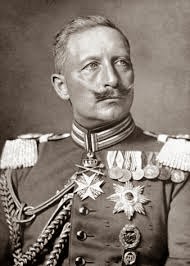
Both in internal and external matters Bismarck dominated German politics from his appointment as chief minister until the death of King William in 1888 and the death a few months later of his son and successor, Frederick. The latter’s son, Wilhelm, was still a young man when he ascended the throne. Unlike his two predecessors, he was less than happy with Bismarck and the latter was soon aware that the new king was seeking advice from others without consultation with his chief minister. Bismarck was humiliated and angry with the new monarch and, on subsequently asking the King if he was out of favour, the latter confirmed his lack of support.

Kaiser Wilhelm II
Bismarck very reluctantly resigned in 1889 but, although he was revered by the public and by many of his colleagues, and he received many honours during the last ten years of his life, he failed to reconcile himself to his dismissal by the monarch and his loss of power. He continued to interfere inappropriately in national and political affairs almost until his death ten years later in 1898. He was never reconciled to this loss of influence in German affairs and remained ungracious in his rejection by the King until his relatively lonely death. He must be held up  to the present day as one of the great statesmen of the world and, no doubt, if he had accepted his retirement from affairs with humility and with thanks for the many things he achieved for his country and the many honours bestowed on him , he would surely remain  the greatest.


Bismarck
It is said that politicians always finish their careers as failures. The transition from fame to the loss of public recognition leaves a lacuna in the politician’s mind which can be hard to accept philosophically. And this applies to other people who have been prominent in the public mind. In my advice to older  people who  wish to enjoy the third stage of life I urge them to respond to lost fame and public recognition with a sense of pride and satisfaction that they have made their contribution, however small, to the betterment of humanity.

Friday, 3 January 2014

The Boy in the Bubble


The Boy in the Bubble – Education as Personal Relationship. Mark Patrick Hederman, Veritas, 2012. pp201.

This review was written on February 27th 2013

This is the eleventh book published by Mark Patrick Hederman since Kissing the Dark was published by Veritas in 1999. He was co-author of the Splintered Heart in 1998. His productivity, knowledge and wide interests are evidence of his wide academic training and his spiritual vocation. His knowledge appears to be encyclopaedic and his writings, particularly over the past 15 years, cover from the distant Greek enlightenment right up to the present day (and the latest five star film!). He can write about current and popular affairs with the same authority and familiarity as he devotes to the more profound subjects of spirituality, philosophy, history, education and human behaviour. 

This book is a plea to reject the traditional rigid three R system of education and instead adopt an educational policy based on a wider syllabus for the child and a different relationship between teacher and pupil. The child should be allowed greater freedom of initiatives and better opportunities to exercise his or her imagination and interests; the teacher needs to be a guide to the child, providing support to him or her in the areas of freedom of thought, expression and initiatives. And the teacher too can be a learner.

For the teacher, the current ‘’oppressor and oppressed’’ syndrome currently perceived by Hederman in our educational system needs to be replaced by a closer, warmer  and more equal relationship between teacher and child, and by encouraging  the child in a wider syllabus than the current three Rs.

I found the first chapter heavy going because of the author’s recourse to the spiritual and to mythology, metaphysics, the unconscious and Jungian psychology and by his long metaphor of Rowling’s Harry Potter and the latter’s influence in stirring the imagination of the young.

The author’s proposals in later chapters were stimulating and radical but perhaps largely unrealistic in the context of the problems facing this country with a high proportion of children, with limited financial resources, with compulsory education up to 16 years and with the conservative attitudes of our teaching profession, politicians and Church, and particularly with the problem of dealing with incompetent and uninspired teachers.  Of course,  some have had the good fortune to meet and be taught by an inspired teacher who conforms closely to Mark’s concept of  what teachers should be like in a perfect world and these fortunate people will always remember the  debt they owe to their mentor.

The methodology Mark Hederman suggests for an educational system would eliminate the “oppressor and oppressed” image of the present system.  He quotes three important sources that support his contention that we urgently need a change in our education system where the teacher adopts a sympathetic and loving approach to the young person as well as maintaining his role as a teacher, while the young person should have a greater degree of freedom in his or her own development.  At least this is what my interpretation is of the three quoted experts I note in Chapter 5 Pat Clarke and Paulo Freire.

Glenstal Abbey
I think the closest one can find to the perfect system can be found in Glenstal and perhaps in Glenstal only. Their curriculum includes not only sport but an emphasis in such areas as natural history, the environment, hobbies, music, art, drama and organised productions by the boys, I suppose they are also encouraged to respond to natural curiosity.

The Glenstal system is possible because of the vocation of the monks and the teaching staff, and their interest and commitment to the welfare of the boys. As far as I can judge from reading  chapter 5, the concept of the educational system put forward by the author  and those  he quotes would be virtually impossible in this globalised world and possibly the type of freedom that he envisages for the children might lead to more frequent aberrant behaviour than is currently the situation.  Whatever about the other chapters, this chapter 5 makes essential reading if we are to understand the thesis put forward by the author..

If the Glenstal school measures up to some of the criteria favoured by Hederman, it is because of  the policies enunciated at its foundation 90 years ago and perhaps too to the example set by the Benedictine monk, Father John F. Sweetman, who came from Downside Abbey to  found Mount St. Benedicts close to Gorey in Co. Wexford. His approach to the students and teachers conformed to the liberal approach advocated by Hederman. It was before the foundation of Glenstal and was quite revolutionary at that time. The first mention of it was in 1905 but it is not clear when the school was established. It may have preceded St. Enda’s, established by Patrick Pearse, whose radical educational policies were similar to those of Sweetman and not different from some of the ideas put forward by Hederman in this book. Was it a coincidence that both Sweetman and Pearse were also extreme in their political views and both had English blood in their veins? Added to Griffith, Casement, Childers, Brugha and others, there appears to have been no shortage of English blood among our revolutionaries! Sweetman’s initiative was to lead to considerable controversy among his brethren, including the allegation that he housed Sinn  Féin activists during the troubles.

In Glenstal the pupils are privileged in the sense that most of their fees can only be afforded by the better off. They are the children of the more affluent. They are expected to spend a short time in the monastery during the summer before their first term to assess their suitability for a boarding school and for the ambience of the monastery.  If such an education system were to exist nationwide it would achieve much of what is in the mind of Mark Hederman, but would it be feasible for the State’s budget and would we need to have suitable teachers to fulfil the criteria of those who will replace the oppressor? Would it be possible to dismiss teachers who do not measure up to the author’s ideals? And would it be possible to create an organisation of retired people, suitably qualified and with the necessary vocational spirit, who could contribute to a wider education that would partly replace the current big classes and the restricted imagination of our average pupil not to mention the restrictive policies of the teaching profession?

Even within the current system, would it not be possible to use the transition year as a means of encouraging more imaginative and uninhibited opportunities for the pupil? Perhaps this is tending more to be a feature of the transition year in recent times. Also the first post-schooling year might be sponsored by a state supported system of special studies, occupation, travel or training along the lines of the compulsory army training which prevailed at such junctures in some countries in the past. In peacetime at least the army could have a major role in training on many aspects of life and future development of potential, including physical training, assessment of suitability for future  careers, the value of hobbies, interests and sports outside the limitations  of a suitable career and the preparation of young people to become part of a modern democratic society and to join a population devoted to the protection of the environment, the need for population control and the elimination of poverty.

Reading his later chapters first might be recommended as I fear some of the opacity in the early chapter may discourage the less patient reader to continue. His final conclusion of nine pages I found a useful summary of his thoughts. Reading the first chapter at the end, preferably at leisure, will help to broaden our insights into the more arcane thoughts of the author before returning the book to the library or, for the teacher and the politician, retaining it as a bedside book.  His conclusions contained in the last chapter are inspirational and idealistic although perhaps a little unreal in to-day’s world.

I next read chapter 8, Alexander Pushkin in Ireland. Sacha Duchess of Abercorn of Baronscourt in Co. Fermanagh close to the Donegal border in the Republic initiated this system of education 25 year ago. It has had some success in schools on both side of the border. The movement was principally inspired by her to heal the political and religious divisions which were so prominent in her part of Ireland. It fulfils some of the changes in education proposed by Mark Hederman. For children it is stated

There has to be the possibility to tap back into the sources of inspiration again and again. Every child has a wealth of imagination which comes naturally and is expressed in games and behaviour patterns usually ignored by the adult world.------ We don’t have to promote it; we only have to remove the obstacles ------.

The Pushkin philosophy is based on the imagination as its key and ‘’promotes creativity as the greatest asset of our people’’. More thoughts about the failure of Sacha Abercorn’s initiative to spread to a wider area of education in the island of Ireland might be worth adding.

Chapter 7 Music in Numbers is part scientific, part philosophical, part allegorical. He talks about the three parts of the brain, the neocortex, the limbic and the serpentine. His allusions and explanations may puzzle some readers. The reader may require more concentration and good insights to absorb all of its content

Mark Hederman is undoubtedly very stimulating in his writing and in his concepts but his book requires close attention and very stern concentration if one is to read the text without too much fatigue. In Music in Numbers  he pleads for much more attention to the unconscious, to what he calls “our inner snake” and for the ordinary mortal he may become a little too subtle and remote. I suspect that only a minority of people could read his 200 pages with ease and without returning frequently to reread sentences and paragraphs to be sure of full understanding. However, the Boy in the Bubble should be read by our politicians, our education authorities and all those who are interested in the welfare of our children. The message to all will be clear even if the best solutions are not always easy to attain.

Monday, 30 December 2013

George III


King George 111 (1738-1817), John Brooke. Granada Publishing , Ltd, St. Albans. 1972. pp 644

This review was written October 28th 2003.

I had borrowed King George 111 from my son David’s library. Including the index and references, it ran to 640 pages and was heavy going at the start but proved later to be both entertaining and very educational. It was an important addition to my knowledge of England’s history. The author was obviously strongly prejudiced in favour of the King and he disabused the popular opinion that he was mad during his reign. He did have a few serious illnesses during the later days of his reign but he was clearly an admirable person during his many normal years and greatly revered by his subjects.

About ten years ago it was stated in the British Medical Journal that the King’s illness was caused by a metabolic disease called porphyria. This explanation of the King’s two serious bouts of illness raised much interest among historians and doctors but the diagnosis was firmly denied by Dr. Geoffrey Dean, the head of the Medico-Social Health Board in Ireland who had a world reputation on the subject of porphyria. Dean was born in England, emigrated and succeeded as a neurologist and research worker in South Africa where he published a book, among other original works, on porphyria. Because of his research reputation he was appointed to the head of the Irish organisation at its inception in the 1970s.

The King’s illnesses were associated with some severe mental changes which might well be described in these early days as a form of madness but the treatment he received from his doctors was appalling and his management by them and other advisors was, to my mind, a major cause of his two prolonged illnesses. There was absolutely no rationale at the basis of his treatment and there was much harm in prolonging and aggravating his symptoms by medical intervention. Constant bleeding, cupping with hot instruments and restraining him in a straight jacket for long periods were only some of his sufferings at the hands of his physicians. Too often his response and reaction to physical confinement and grossly irrational treatment was interpreted as part of his madness. His too numerous doctors were totally ignorant of the nature of his illness and were clearly responsible for prolonging his confinement and isolating him from his wife for long periods of time and from his family, friends and Court and political colleagues. We were to wait more than another one hundred and fifty years before the concept of evidence-based medicine was established and applied to medical practice.


George III
 was the grandson of George II. He succeeded his grandfather in 1760 when he was 22 years of age. He had a long reign of 57 years. (Elizabeth II is now in the 57th year of her reign.) George I, the monarch of the German State of Hanover had become King of Great Britain and Ireland after the departure of William III of the Bottle of the Boyne fame. He was chosen for want of a better choice after William retired and more senior members of his Hanoverian family were rejected because they were Catholics. The Georges continued to remain heads of the small North German State. The first George rarely visited London and had little interest in the British nor had they in him. However, George III had little interest in Hanover and his connection with the small and unimportant North German State. He never visited Hanover during his long life in England.

He reigned during the American civil war, the ‘French Revolution and the Dublin Parliament and its abolition in 1801 after the 1798 Rebellion. It was an important time in the history of Britain and was to see many changes in the political, social and commercial lives of the people. There is no evidence that George paid a visit to Ireland and, with those of his subjects who gave a thought to Ireland, he was distinctly opposed to any form of independent spirit among the Irish and probably too to its Protestant Parliament.

Destruction of Statue of George 111 in New York, 1776
He was to the very last opposed to American independence and maintained a consistent policy of army intervention in resisting American patriots. He was certainly opposed to the more liberal views of Edmund Burke and some of his Whig colleagues who supported the Irish Parliament, despite the exclusion of Catholic and  non-Anglican  members and the restrictions of Catholics in many aspects of Irish life. Edmund Burke was also a good deal more realistic in thinking that such a remote and rapidly expanding and influential community as the Americans was unlikely to retain the influence of Westminster in its affairs.

The book is worth reading for its historical and educations value. It provides good insights into the political and parliamentary system which prevailed in Britain and which emphasises the long and progressive tradition of parliament and the British people in tandem with the continued existence of royalty. It was a reminder that democracy can exist in cohesion with a monarch and certainly establishes the British claim to be the birthplace of the democratic system combining a people’s electoral influence with a monarchy with a still influential role but deprived of any significant political power.

This book has added to my knowledge and interest of British history and is a reminder that, despite the political division between Ireland and Britain in more recent times, we shall always remain in close contact with our neighbouring island in terms of social, cultural, traditional and language terms and to the mutual advantage of both. One must wonder whether 1916 and the rhetoric of the Republic, and the ensuing Civil War, was a better prospect than Griffith’s dual monarchy with Ireland in charge of its own affairs but as part of a federation with England, Scotland and Wales and linked solely by the Crown but sharing the many attributes which were and still are common to the four countries. As an offspring of one who was active in 1916 and who remained an important influence during the revolutionary period afterwards, I believe we would have reached an early settlement based on our increasing aspirations aimed at self-rule after the Great War without the intervention of the few who precipitated the 1916 rebellion and the subsequent futility and tragedy of the Civil War and the deepening of the division between South and North.

Sunday, 22 December 2013

The Anglo Irish Tradition


The Anglo-Irish Tradition by J.C.Beckett. Faber & Faber, London 1976. pp 158.

This review was written on January 19th 2005.

This book was recommended and lent to me by Frank Barrett. It is well written with good insights into the role of the Anglo-Irish and their origin as far back as the twelfth century. The Anglo-Irish were at their most powerful and most influential from the time of the Restoration towards the end of the seventeenth century until the Union in 1801. They were politically powerful with their own parliament during the eighteenth century but their political influence began to wane after the Union because of the transfer of the sphere of influence to Westminster and the gradual franchising of the Catholics leading up to and after Catholic Emancipation in 1829. The subsequent land acts of the late nineteenth and early twentieth centuries were to lead to their ultimate loss of political, social and economic influence. By the end of the nineteenth century 80% of the MPs attending Westminster were Catholics.

Beckett emphasises throughout the book that the Protestant minority, although it had held full power in Ireland subject to the Crown, always felt threatened and vulnerable because of the great majority of Catholics in the country. This may be so and their vulnerability increased during the nineteenth and early twentieth centuries but this does not take from the fact that even as late as the first half of the twentieth century the protestant minority held a disproportionate amount of power and influence in the commercial, industrial and professional life of the country. It was only by the mid-century or later that the Protestants were no longer the privileged 10% of the population in terms of wealth and influence although they had lost their political influence entirely at the time of the Treaty with Great Britain.

By the middle or end of the nineteenth century the Protestants, at least those in the South and in the West, no longer had political power nor had they any influence in the advance of nationalism. In the three southern and western. provinces it was the reform of the municipal corporations in 1840 which broke the protestant monopoly of power in the cities and boroughs, and which added to the effects of the Reform Act of 1832. Dealing with the landlords in the nineteenth century, Beckett comes out in their defence, calling in question the various allegations which have long been regarded as self-evident truths. He does not think rents were excessive; many landlords were in serious financial situations (almost certainly true); that evictions for non-payment of rent were rare and that most of the landlords’ problems were created by poor management by themselves and their agents, and of course their  frequent absences in London. He compares the Irish situation with that of tenants in England and Scotland and does not think the Irish tenants were very much worse off.

Beckett also thinks that much of the violence against the landlords was traditional and was inherent among the Irish tenantry since the eighteenth century; that it was partly based on a long folk memory. It is clear that the famine brought a new degree of bitterness between tenant and landlord. The landlord shared the blame with the government in Westminster for the disaster. The widespread disorders following the famine were fomented by the circumstances at the time, by the tradition of violence in rural Ireland and by the many secret societies which were the basis of many local conflicts. The tenants were also partly goaded by the home rule politicians who tended to magnify their grievances and who linked land tenure problems with that of Home Rule. To the Catholic majority, according to Beckett, the landlords were both a relic and symbol of conquest, confiscation and tyranny.

In discussing the violence which existed in rural Ireland during the eighteenth and nineteenth centuries, he thought this tradition partly accounted for our civil war in 1922 and the subsequent destruction by the IRA of the many monuments erected during the British times. This destructiveness even affected our legislators when they moved Queen Victoria form her plinth outside Leinster House and allowed her to be transported to Australia. (As an aside, I had refused to present the Leo Whelan picture of the General Headquarters Staff to Charlie Haughey when he was Taoiseach in the early 1990s because he wished to hang it in the Royal Hospital as part of MMI. I suggested to him that the Royal Hospital should be retained as a museum and a lasting memorial to the British times in Ireland. The history of the Hospital and its many artefacts and reminders of the British times made it eminently suitable for such a purpose. It would have been a popular museum for visitors and for the Irish people, particularly if the large statue of Queen Victoria were to grace the quadrangle of the Hospital and if the wonderful chapel were retained in its old state and with its ancient furnishings.)

The British Government by the nineteenth century came to regard the landlords as the principal barriers to a solution of the Irish question. He makes the important point that, largely because of the influence of O’Connell, it was the alliance between the Church and the Catholic population which laid down the lines which nationalism was to advance in Ireland. There is the important mention of Thomas Davis and his advocacy of a united nationalist movement which would be independent of religion. Davis strongly supported the establishment of the three Queen’s Colleges in the mid-nineteenth century but the idea of a university where Catholic and Protestant students could come together, free from denominational tension, was anathema to the Catholic Hierarchy. Our breed of Catholicism in Ireland has much to condemn it for the political disasters which marred the subsequent one hundred years in the country. Davis’s ideals suffered, not only because of the intervention of the Roman Catholic bishops, but also because of the fears and insecurity of the Protestant minority. Davis is remembered mainly, not for what he achieved, but for what he advocated, that is, a truly non-sectarian Irish nationalism transcending religion, class and ancestry.

Beckett refers to the major role the Anglo-Irish played in the eighteenth and particularly in the nineteenth century in stimulating an interest in archaeology, antiquities and literature. This was an area which was free from the divisiveness of religion and politics, but the author does make the point that these protestant interests lead ultimately to the new spirit of a Gaelic Ireland, entirely separate from English culture, an Ireland with a rich folklore and mythology which was unique among Western European lands. It was seen as a golden age, a consciousness of which lead to a more extreme and more divisive nationalism. Thus the Anglo-Irish unwittingly contributed to their own downfall. The expanding ideal of a Gaelic Ireland was to breathe an attitude of even racial exclusion.

A further reverse for the Anglo-Irish during the nineteenth century was the disestablishment of the Irish Church in 1869, followed by the confiscation of almost all the Church’s property.

Beckett appeared to me to be entirely objective about the role of the Anglo-Irish in the earlier part of  the book but as we arrive towards the end of the nineteenth century he shows a definite sympathy for them and a bias  which corresponds to their loss of power and privilege. He states that the Home Rule movement had some initial support from the  Anglo-Irish but this soon developed into bitter opposition because the Home Rule movement had accepted all the views of the Catholic bishops in relation to education and social legislation. He writes about the denominational policies required by the Church, meaning of course the Catholic Church.

In Beckett’s long discussion about the attitude of the Anglo-Irish to the gradual empowerment of the Catholics, it is extraordinary how much the Protestants feared the consequences of such a political change. Was it that they expected the Catholics to treat them with the same contempt as they had treated the Catholics in the past and were they likely to exclude the Protestants from all political influence? There is no doubt that the Anglo-Irish were justified in believing that they were going to lose their privileges and their financial dominance but they could hardly believe that the Catholics would treat them as badly as they had treated the Catholics in the past.

Beckett finishes his sixth chapter with a more than gloomy note that the Anglo-Irish minority in the South of Ireland was deserted by both Britain and Ireland, and was treated with such little respect at the time of the Treaty. He quotes Garibaldi who said ‘They have made me a stranger in the land of my birth’. If the Anglo-Irish lost out as badly as they thought and as he suggests, it was as much their own fault as that of the Treaty plenipotentiaries and the Free State government.  The Treaty plenipotentiaries took every measure to ensure the protection of the protestant minority in their agreement, including having their own state supported denominational schools. And De Valera consulted with representatives of the Protestant community before the plenipotentiaries left for London. To my knowledge no political or fiscal action was ever taken by subsequent Irish governments to reduce their privileges or affect their dominance of the commercial and professional world. In fact, Cosgrave appointed a disproportionate number of Protestants to the Senate when it was elected in 1923, some of whom gave loyal and valuable service to the country although they had no executive function.

The Protestants were eventually disadvantaged by their own failure to take part in the day-to-day political activities of the new state, their isolation in their own schools and their close association with secondary schools in England. Their slow acceptance of a free Irish state, added to their educational isolation, must partly account for the halving of the minority population over the last eighty years. Things might have been different if in the early days they had looked to Ireland for their future, not to the island across the water.

Yeats, speaking a few years after the setting up of the Irish Free State, protested that Protestants were just as Irish as Roman Catholics. According to Beckett, Yeats called on the Protestants to assert themselves in the life of the country. He said ‘Ireland is not more theirs than ours. We must glory in our difference, be proud of it as they are of theirs’. But sadly, with few exceptions, they did not respond to Yeats’s plea. Of course, the minority must have felt oppressed by the increasing influence of the Roman Catholic Church on the social life of Ireland and on the Free State Cabinet. They rightly must have resented the Hierarchy’s intervention on the issues of mixed marriages, divorce and non-denominational education. Their alienation must have been aggravated by the Irish language policies of successive governments and by the Civil War and its tragic consequences.

Coming to the end of the book, his complaint about the fate of the Anglo-Irish in the new Irish Free State becomes more strident. Written in 1976, he attributes the decline in the Protestant numbers to their powerless state because of the policies of the Irish government. This view is hardly tenable in view of the fact they were allowed to retain all their possessions and wealth. They were free to take part in both local and national politics. However, with few exceptions, they could be seen to have deserted the corridors of political power and in the early years certainly they continued to look to England as their natural background and the English as part of their heritage. The last paragraph of the epilogue is about as patronising as one would expect from such a proud and arrogant minority.

Friday, 13 December 2013

brain / noun 1. an organ of soft nervous tissue contained in the skull of vertebrates, functioning as the coordinating center of sensation and intellectual and nervous activity.


A Portrait of the Brain by Adam Zeman. Yale University Press. pp 246.

This review was written on July 1st 2011

This book was borrowed from the RDS. There are ten chapters and an epilogue, and a useful glossary of 180 words which gives easy access to their meaning, most of which I could not define or even recall.  

Most chapters were introduced with a case-history encountered by the author during his practice as a neurologist. It is clear that a huge amount of knowledge of the physiology, anatomy and cellular function of the brain has accumulated in recent times and this knowledge has accelerated with the development of the various investigative techniques which are now available to us. The author is successful in conveying what is a difficult subject to his readers but the many concepts and unfamiliar words which are presented to the reader, even with my training as a doctor, would make it necessary to read the book again, and perhaps again, to understand some of the concepts and complexities which are described by the author. Words which are familiar but not clearly understood even to the trained physician include nucleic acid, organelles, mitochondria, eukaryotic and prokaryotic cells, messenger DNA, chromatin, prions, ribosomes, Golgi apparatus, lysosomes, and many more. I guess that a   classical scholar might be more familiar with their meaning than the average physician!

Some of the case histories are of rare syndromes which might have puzzled the most experienced neurologists but the study of these, thanks to modern investigative techniques and the clinical insights of the trained neuroligist, has helped to unravel the function of the brain to an extraordinary degree. These case histories are the basis of fascinating neurological detective stories. It is clear that the author has the knowledge, insights, classical learning and erudition to understand and convey the intricacies of a very complex subject and that his writing should be essential reading for to-day’s well trained physician, whatever his speciality.  

Chapter 10 is interesting and challenging as it enters the domain on the relationship between the science of the brain and matters of the soul, consciousness and beliefs, some of which have religious overtones. This element of knowledge includes our thoughts, emotions, personalities and behaviour. The author raises the question whether we can ever establish the scientific or physical basis of consciousness and our emotions. Based on our extending insights into the scientific basis of the brain’s function, it would seem to me that there must be a physical basis to our emotions and consciousness. Chapter 10 provides a challenging view of the author’s on this intriguing subject.

In writing this short review I am conscious of the necessity of reading the book again if I am to achieve a better understanding of its contents. I am reluctant to do so as I have so many other books on my desk to review. If I were still in practice and not approaching my 90th year, I would add the book to my library.  This short review does little justice to the importance of the book and to the intriguing case histories which provide the basis for the latter-day neurologists’ insights into the working of the most complex organ known to Man, the brain.

I am left with the thought that some day homo sapiens will have achieved a computer so advanced that it will provide all the functions of the human brain and, perhaps with progress in microscience, an organ only microscopic in size. There is no reason to believe that the progress of scientific knowledge is likely to slow or stop except through the intervention of a final human holocaust. Reproducing the human brain will give rise to the most bizarre social and political circumstances for mankind, circumstances which are beyond the imagination of the current organ, remarkable and all as it is.

Saturday, 7 December 2013

The Dreyfus affair


Twice Condemned – Irish views of the Dreyfus affair. Richard Barrett. Original Writing 2011. pp 104.

This review was written on July 1st 2011.

Alfred Dreyfus, a member of a wealthy Jewish family in France, was a captain in the French artillery. He was accused of spying for the Germans and condemned as a traitor and to life imprisonment in French Guinea in 1894. Almost certainly the evidence against him was far from convincing and the charges against him were vigorously denied by him. However, his fate was to become a matter of French and world importance after Emil Zola’s "explosive" accusation in early 1898 of military corruption and the wrongful arrest and imprisonment of Dreyfus. Zola’s intervention was to lead him into trouble with the French authorities but it led to a second enquiry into the charge of spying. This second enquiry still confirmed his guilt by a thin majority of 3 to 2  but his sentence was reduced on the grounds of "extenuating circumstances". He was pardoned in 1899, five years after his arrest, but was not officially exonerated by the French government until 1906 after another seven years.

Emile Zola's challenge.
Barrett’s short book covers more than the Irish views of the Dreyfus affair. He included the attitudes of the media in Britain, Ireland, the United States and the Commonwealth countries not to mention a few others. The British view of the affair was devastatingly critical of the French and of the increasing anti-Jewish attitude of the many French and particularly of the Roman Catholic Church authorities in that country. The British view was closely mirrored by Protestants and the Protestant media in Ireland and in other countries abroad. The Catholic authorities were defensive of the French decision on Dreyfus and they were motivated to some extent by the then prevailing anti-Jewish attitudes of some of their adherents. The Catholic attitudes in Ireland were mixed in their opinions and were undoubtedly influenced by their nationalistic aspirations and the anti-British attitudes which were widely prevalent in Ireland at the turn of the century.

Alfred Drefus
Apart from the genuine criticism of the justification of the arrest and imprisonment of Dreyfus, it is clear that media opinion in other countries, including particularly Britain and Ireland, were based on nationalist prejudices, general attitudes to France and its politics, anti-Semitism and the religious persuasion of the writers. As Barrett says "In England, the reaction ---- had always been more anti-French than pro-Dreyfus" and "in nationalist Ireland, the reaction had always been more anti-British than anti-Dreyfus". And the prevailing anti-Jewish prejudices in France must have contributed much of the genuine differences among the French themselves.

A view of Devil's Island where Dreyfus was held.
To me the whole affair was a telling example of the fundamental differences which govern public opinion at an international level and which are inspired to such an extent by local social, religious and political circumstances and prejudices.

After he was pardoned, Dreyfus rejoined the French army, fought in the Great War and died in 1935.